
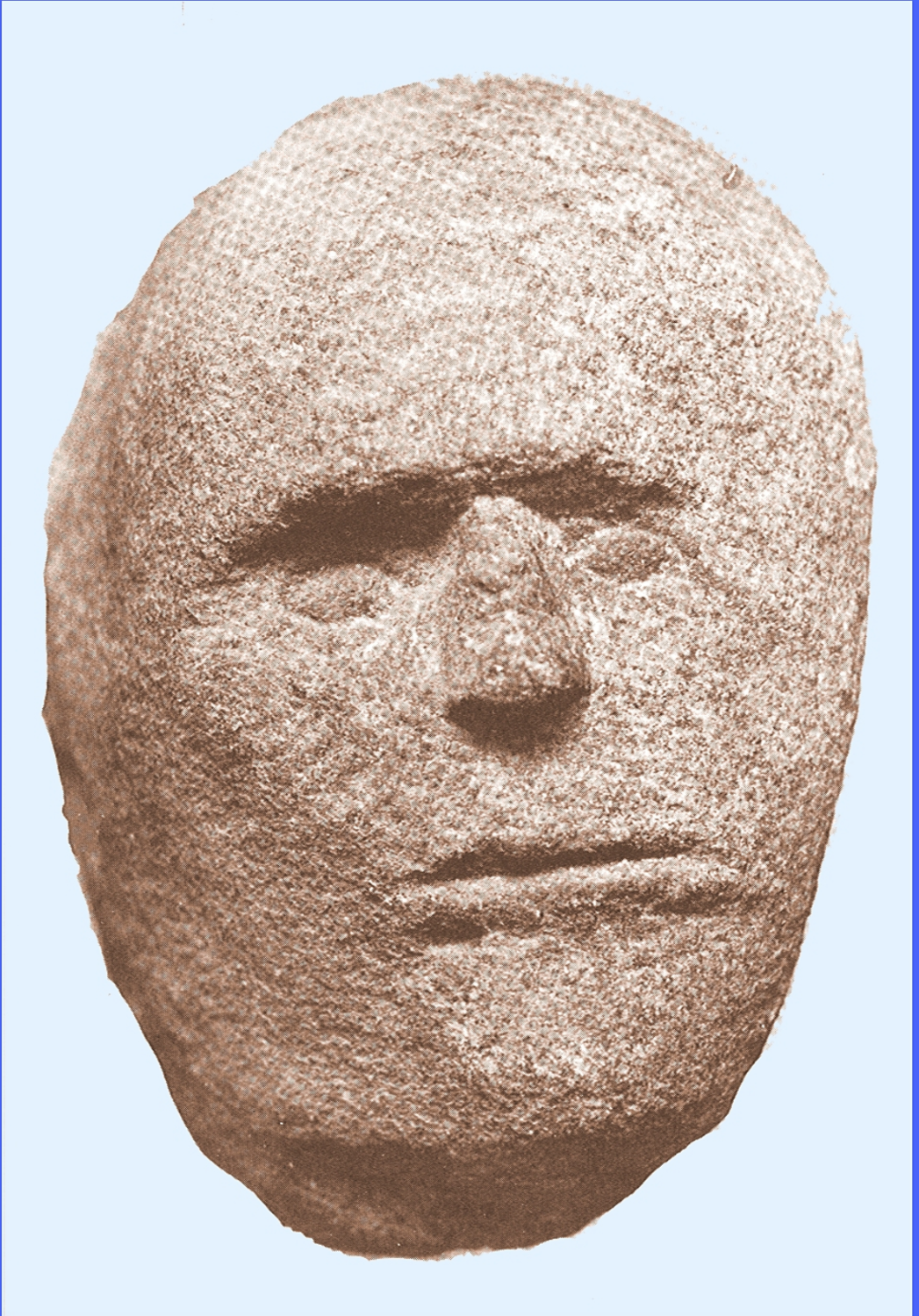
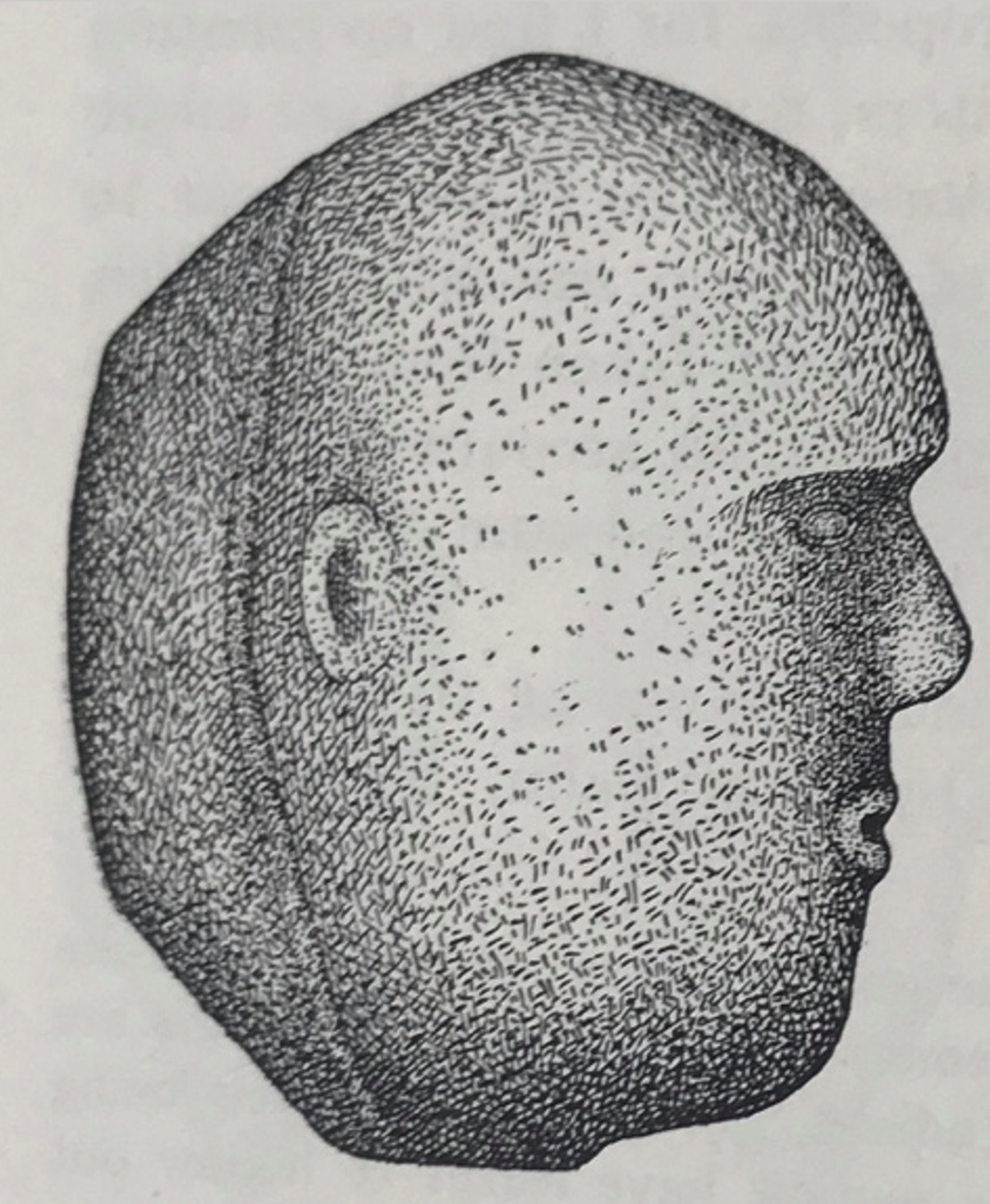


Sometime around 1811, the story goes, Essex contractor Moses Andrews, digging a cellar hole, unearthed something unusual. It wasn’t just another fieldstone or fragment of ledge. It was a stone, carved into the distinct shape of a human head.
That discovery set off a chain of events that would carry the object far beyond Essex, and into the realm of speculation, commerce, and, eventually, mystery.
The item came to be known locally (and colloquially) as “Old Baldy,” and for a long time it was something of a curiosity. Thomas Marshall Burnham, a local Essex trader with an eye for novelty, placed it on a gatepost in front of his home. Essex school children would decorate it with scarves and a chamber pot helmet each Fourth of July.
Next week, author and Essex resident Rob Fitzgibbon will present, “Old Baldy: Ancient Stone Head of Essex” on Wednesday, May 7, at 6 p.m. at the TOHP Burnham Public Library in Essex. The event is free and open to the public.
Fitzgibbon has taken up Oldy Baldy as something of a local cause, diving into the full mix of local anecdotes, Baldy’s documented movement, and lingering uncertainty. In 2022, Fitzgibbon published a four-part research series on the global travels of this curious little head dug up in Essex.
In an era before formal archaeology took hold, the head’s origins were left largely to imagination. What is clear is that it drew attention—and, eventually, great interest. Some believed it to be Native American. Others speculated it might date to classical antiquity, or even have arrived as ballast on a ship from Europe.
At some point in the early 19th century, the artifact made its way to Boston, where it was exhibited as a curiosity. There, its story appears to have evolved further, possibly shaped to enhance its appeal. From Boston, it was sold and ultimately transported overseas, where it surfaced in Copenhagen and was reportedly identified—incorrectly—as an artifact of Roman origin.
The historical record claims that an unnamed Essex sea captain encountered the object abroad and, remarkably, recognized it as the same carved head once displayed back home back on Cape Ann. After that, the trail went cold, until it ended up back in Massachusetts.
Drawing on historical records, land ownership accounts, and regional context, Fitzgibbon traced both the physical journey of the object and the evolution of the stories surrounding it. Old Baldy, hidden in the museum’s basement for decades, currently away from public view at the Peabody Essex Museum’s Phillips Library archive storage.
In many ways, two centuries after its discovery, “Old Baldy” remains less a solved case than an enduring question. And after all his research, hunting and writing, Rob Fitzgibbon knows that’s perhaps what has kept it alive all these years in Essex’s collective memory.


Comments
No comments on this item Please log in to comment by clicking here