

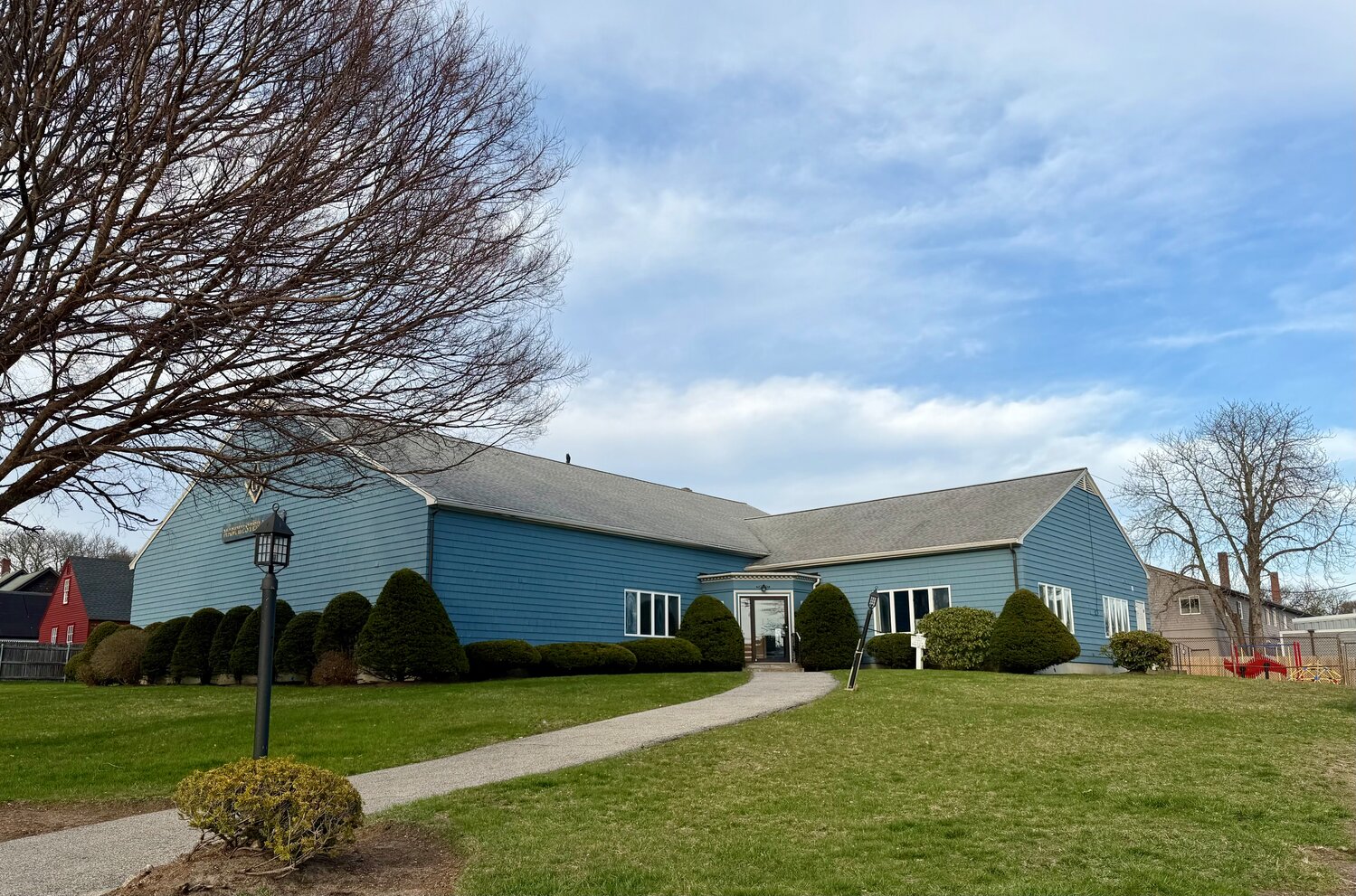


The Town of Manchester took a significant step to establishing its first dedicated senior center, closing last Thursday on the purchase of a portion of the Masonic Hall property just behind Town Hall.
The $1 million acquisition, structured as a condominium arrangement, caps a long-running—and at times stalled—effort by town officials to secure a centrally located site for a senior / community center, something Manchester has notably lacked even as neighboring Cape Ann communities have long maintained such facilities.
“This is a real win for the town, and a real win for the Masons,” said the Masonic Lodge’s James Brown, who was central in the negotiations with the town. He said the path to last week’s closing was not exactly straightforward, but in the end, it was worth it.
Manchester COA Director Mary Minor agreed, saying the value of a senior center in Manchester can’t be understated. It’s not just about programs, or services, or a building, she said. It’s about supporting a vital part of the community and the seniors who are our neighbors, volunteers, and mentors.
“This will be more than a building—it will be a place where everyone belongs,” Minor said.
The approximately 4,000-sf building sits in the perfect location, adjacent to Manchester’s largest public parking lot, and next door to the American Legion Hall.
Preliminary plans call for a renovation to expand the building into three distinct components: a newly configured Masonic Hall, a dedicated senior center, and a shared public area designed to host meetings and events. The inclusion of a commercial kitchen is expected to broaden the building’s utility, potentially supporting community programming and rentals. Under the condominium agreement, the town owns two-thirds of the property and the building, which will be an estimated 7,590-sf after construction.
Successfully getting to a completed renovation will require time and a substantial fundraising beyond public funding, but the sale is a critical first step that has its own benefits. With the sale complete, Manchester Town Administrator Tony Barletta said the town will be able to begin using of the building for some COA events in their new shared space at the Masonic Hall.
Getting to “yes.”
The path to last week’s closing was hardly smooth and riddled with starts and stops.
Indeed, several years ago, the town enlisted two residents—one, a former Select Board chairperson, and another, a commercial real estate investor—to approach the Masons with the COA with the idea of an outright purchase of the building.
The Masons—a traditional, risk-averse fraternal order—were open to a conversation, but not an outright sale. They knew their building, used for meetings roughly once a month, was underutilized. But they were not interested in giving up their home of the last six decades.
Despite early exploring of a condo structure, it was money that blocked a deal. The two sides couldn’t bridge a financial gap that was said to be no more than $50,000. The town walked away, moving on to other senior center options, most notably signing a right of first refusal option in 2022 to purchase the Cornerstone Church building on School Street. It was never exercised.
Then, a change in temperature came about two years ago, when Select Board member Brian Sollosy reinitiated contact, reaching out to then-master of the lodge, Orestes “Rus” Brown. That led to a new round of discussions, with more participants. Among them were Todd Crane and James Brown representing the Masons, as well as then-Town Administrator Greg Federspiel and, later, his replacement, Tony Barletta, who worked to shape a workable framework.
“It was Brian Sollosy’s vision and positivity that got this started again,” Rus Brown told a gathering of town officials, staff, and COA members at last week’s signing of the memorandum of understanding. “And that positivity and vision is what led to today’s success.”
In the end, that group produced a revised agreement that balanced the needs of both parties. This time, the idea of a shared-ownership structure was seen not as a concession but as a clever solution for gaining a new community resource while allowing the Masons to remain in their home, albeit in a significantly smaller footprint. Throughout planning, John Harden, a partner at Olson & Lewis in Manchester, donated significant time and resources to complete architectural drawings with the team.
“This wasn’t an easy solution. A lot of people had a hand in it, and, yes, it took a long time but not one person involved took their eye off the ball,” said Barletta. “I’m really proud of what we’ve done here.”
A novel solution to an increasingly common challenge
Communities across Massachusetts have increasingly turned to adaptive reuse of underutilized buildings—particularly churches and fraternal halls—as well as shared-use civic spaces that combine multiple functions under one roof.
But condominium-style ownership, while common in commercial real estate, is less frequently used in small-town municipal projects. That added a layer of complexity to Manchester’s approach.
At a meeting last month of the Manchester Division of the Greater Cape Ann Chamber of Commerce, Barletta said the deal between the town and the Masons represents a novel way to address increasingly common municipal challenges in other communities.
Across New England, fraternal organizations such as Masonic lodges and Elks halls have had to face decisions about underused buildings as membership has declined. In some cases, including Masonic buildings in Arlington and Northampton, lodges have remained in place while leasing or sharing portions of their buildings with other users.
What is far less common and perhaps unique—and central to Manchester’s approach—is the use of a legal condominium structure to divide ownership to allow both the town and the Masons to retain ownership of the real estate.
Manchester has, at times, shown a willingness to pursue unconventional partnerships to solve local challenges. About a decade ago, the town played a key role in “incubating” Black Earth Compost, providing access to unused town-owned land off Upper School Street in the Limited Commercial District in exchange for curbside compost pickup. The company has since relocated to the town’s transfer station off Upper Pine Street and, today, is a major for-profit regional composting operation serving communities from Rhode Island to southern New Hampshire. Manchester residents continue to benefit from the relationship, receiving curbside service, along with access to free compost pickup.
Just the beginning …
For Manchester COA members who have been lobbying for a permanent home for years, last week’s closing was a true milestone that has finally become real.
“I know it a took a lot of work by a lot of people to make this happen. We now have a place for our seniors to turn to, and engage with each other as part of the community,” said Manchester’s Linda Crosby, who added that Manchester is the only community in the region without a dedicated facility for its seniors. And that gap has become more pronounced as the town’s population ages.
Last year, voters approved funding for the purchase, which cleared the way for last week’s closing. And next month, at Manchester’s 2026 Annual Town Meeting, a warrant article seeks additional funding—reported at up to $350,000—to advance the next phase of the project, focused on design and planning work needed to move the renovation forward. It’s expected to pass.
With the acquisition now complete, attention turns to the far more challenging phase: renovating and expanding the building into a functional, multi-use space.
To lead that effort, the town has tapped Susan Beckmann, former chair of the Select Board and former chair of the Manchester Essex Regional School District Committee. Beckmann is expected to coordinate what will likely be a multi-year campaign involving private donations, grants, and other funding sources to raise the estimated $7 million to complete the project.


Comments
No comments on this item Please log in to comment by clicking here